
- Predictive SEO uses AI to forecast ranking and traffic changes before they happen
- It shifts SEO from reactive fixes to proactive, data-led planning
- AI models identify rising keywords, emerging opportunities, and potential risks
- In competitive UK markets, predictive SEO improves timing, efficiency, and ROI
Predictive SEO: Using AI to Forecast Ranking Trends
Search engine optimisation has traditionally been reactive. Rankings change, traffic drops, competitors overtake, and only then do businesses respond. In 2026, that approach is no longer sustainable. With AI-driven search and increasingly competitive digital markets, successful SEO is becoming predictive rather than reactive.
Predictive SEO uses artificial intelligence and data modelling to forecast ranking trends, traffic shifts, and competitive movements before they happen. For UK businesses, this creates a meaningful advantage: the ability to plan SEO strategy proactively, reduce risk, and invest resources more efficiently.
This guide explains predictive SEO in clear, accessible language, while also offering the depth decision-makers need to evaluate whether it’s worth adopting.
What Is Predictive SEO? (In Plain English)
Predictive SEO is the practice of using AI and historical data to anticipate future search performance. Instead of asking, “Why did my rankings drop?”, predictive SEO asks, “What is likely to happen next, and how do we prepare?”
AI systems analyse patterns across:
- Historical keyword rankings
- Search demand trends
- User behaviour signals
- Algorithm updates
- Competitor activity
From this data, predictive models estimate:
- Which keywords are likely to rise or decline
- Which pages are at risk of losing visibility
- Where new opportunities may emerge
Put simply, predictive SEO helps businesses see around corners rather than react after the fact.
Why Predictive SEO Matters More in 2026
Search engines have evolved dramatically. Modern algorithms, led by Google, use AI to evaluate context, intent, and engagement rather than static signals alone.
This creates three major challenges for businesses:
- Rankings fluctuate faster
- Algorithm changes are less transparent
- Competition reacts more quickly
Predictive SEO addresses these pressures by turning SEO from a guessing game into a data-informed forecasting process. For UK businesses operating in competitive local and national markets, this change can mean the difference between steady growth and constant firefighting.
How AI Makes SEO Predictive
AI enables predictive SEO by processing vast datasets and identifying patterns that are impossible to detect manually.
Key AI capabilities include:
Pattern Recognition
AI identifies correlations between ranking changes and factors such as:
- Content updates
- Backlink velocity
- Search intent shifts
- Seasonal demand
These correlations help estimate what is likely to happen next.
Time-Series Analysis
Machine learning models analyse trends over time, not just snapshots. This allows SEO teams to forecast:
- Traffic peaks and dips
- Keyword volatility
- Long-term growth potential
Scenario Modelling
AI can simulate outcomes based on different actions, such as:
- Publishing new content
- Updating existing pages
- Improving internal linking
This supports more confident, strategic decision-making.
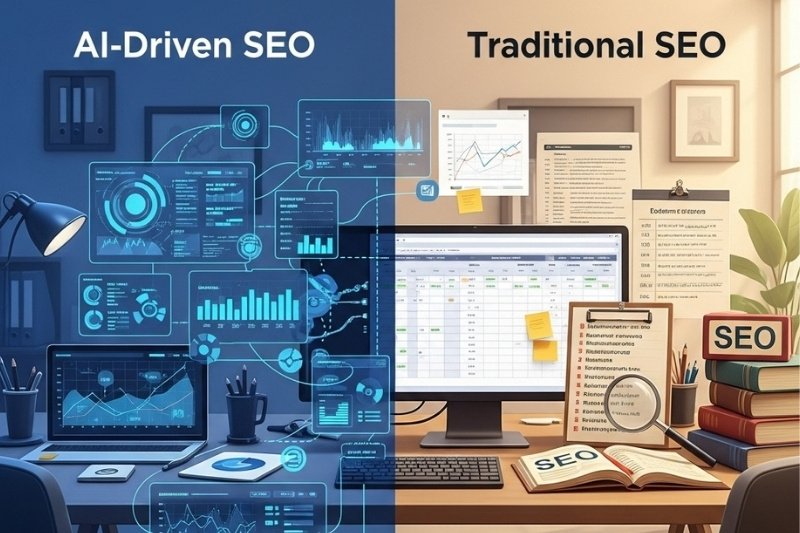
Predictive SEO vs Traditional SEO Forecasting
Traditional SEO forecasting often relies on:
- Historical averages
- Manual trend observation
- Best-guess assumptions
While this approach can provide rough direction, it struggles in fast-changing search environments.
Predictive SEO, by contrast, uses:
- Real-time data streams
- Behavioural signals
- Adaptive machine learning models
The result is more accurate, flexible forecasting, especially in fast-changing search environments.
What Predictive SEO Can (and Can’t) Do
It’s important to set realistic expectations.
What Predictive SEO Can Do
- Identify keywords likely to gain or lose traction
- Highlight pages at risk of ranking decline
- Reveal emerging content gaps
- Improve timing of SEO initiatives
What Predictive SEO Can’t Do
- Guarantee rankings
- Replace SEO fundamentals
- Predict exact algorithm changes
Predictive SEO is about probability rather than certainty. Used correctly, it reduces risk and improves planning, but it does not eliminate uncertainty.
How Predictive SEO Helps UK Businesses Specifically
UK search markets have distinct characteristics, including strong local intent, intense competition in service industries, seasonal demand fluctuations, and regional differences in language and behaviour.
Predictive SEO helps UK businesses respond to these nuances by preparing for seasonal search changes, anticipating competitor movements, aligning content planning with future demand, and optimising budgets more effectively.
For example, instead of reacting to declining traffic in Q4, predictive models can flag risks months earlier, allowing corrective action before revenue is affected.
Predictive SEO and Content Strategy
One of the most powerful applications of predictive SEO is content planning.
AI can forecast which topics are gaining momentum, when interest is likely to peak, and which formats perform best for specific search intents. This allows businesses to publish content ahead of demand, update existing pages proactively, and build topical authority before competitors do.
When combined with well-structured content silos, predictive insights ensure each new page strengthens overall site relevance rather than diluting it.
Forecasting Keyword Trends with AI
Keyword research is no longer just about search volume; it’s about direction.
Predictive SEO evaluates keyword trajectories by analysing:
- Search growth rate
- Volatility
- Competitive saturation
A keyword with moderate volume but rising demand can often deliver better long-term returns than a high-volume term in decline. AI helps surface these nuances, enabling smarter and more sustainable targeting decisions.
Predictive SEO for Technical Optimisation
Predictive models are not limited to content and keywords. They can also highlight technical risks before they impact performance.
They can also flag:
- Pages likely to suffer from performance issues
- Crawl budget inefficiencies
- Indexation risks
By addressing these issues early, businesses can prevent ranking losses rather than scrambling to recover from them.
How Predictive SEO Supports Internal Linking and Silo Structures
Predictive insights improve internal linking by identifying which pages are likely to gain authority, which supporting content needs reinforcement, and how users and crawlers are most likely to move through the site.
This strengthens silo structures, improves indexation, and helps AI-driven search engines clearly understand topic relationships across the site.
Common Misconceptions About Predictive SEO
Many businesses hesitate to adopt predictive SEO due to misconceptions. Some assume it’s only suitable for large enterprises, when in reality it can be scaled effectively for SMEs. Others worry it replaces human expertise, when in fact AI supports analysis while strategy remains human-led. There is also a belief that predictive SEO is too complex to be practical, but when implemented correctly, insights are clear, actionable, and directly tied to business outcomes.
Understanding these realities helps businesses adopt predictive SEO confidently.
Predictive SEO and ROI Measurement
Predictive SEO improves ROI by reducing wasted effort, improving the timing of campaigns, and prioritising high-impact actions. Rather than spreading resources thinly, businesses can focus on initiatives with the highest likelihood of future returns.
SEO for Laymen: A Simple Way to Understand Predictive SEO
Imagine driving using only the rear-view mirror. That’s reactive SEO, responding after things have already changed.
Predictive SEO is like using a GPS with traffic forecasts. You still drive the car, but you’re warned about problems ahead and can change course early. AI doesn’t run the business; it simply helps leaders make better decisions sooner.
How to Start Using Predictive SEO in 2026
For most UK businesses, predictive SEO works best when layered onto strong existing foundations. These include a clean technical setup, clear content silos, consistent publishing, and reliable analytics.
- Clean technical setup
- Clear content silos
- Consistent publishing
- Reliable analytics
Once those foundations are in place, AI insights guide what to prioritise, when to act, and where to invest. This phased approach maintains stability while unlocking future growth.
The Future of Predictive SEO
As AI continues to evolve, predictive SEO will become more accurate and more accessible. Businesses that adopt it early gain strategic foresight, competitive resilience, and stronger alignment with AI-driven search engines.
Those who ignore it risk falling behind, not because SEO stops working, but because others plan better.
Final Thoughts: Why Predictive SEO Is a Competitive Advantage
Predictive SEO doesn’t promise certainty. What it offers is clarity in an uncertain search landscape. For UK businesses navigating AI-driven search in 2026, the ability to anticipate trends, reduce risk, and plan proactively is no longer a luxury; it’s a necessity.
SEO is no longer just about reacting faster. It’s about thinking further ahead.
In This Article
Free SEO Audit & Strategy
If you’re unsure whether your current SEO approach is future-ready, or if AI can help you grow faster without risking visibility, we can help.
Ready to Choose the Right SEO Strategy?
Book a Free 30-Minute SEO Consultation