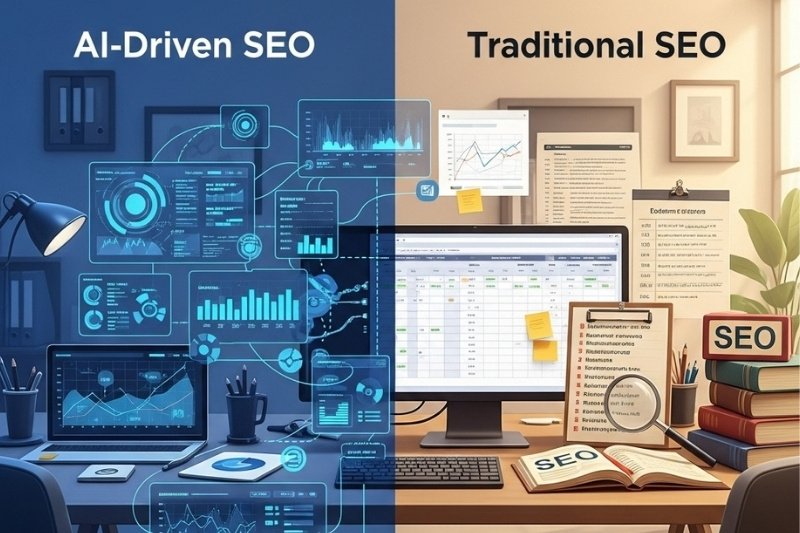

How AI Helps Create Content that Matches Search Intent
One of the biggest reasons websites fail to rank, despite publishing regular content, is misaligned search intent. In simple terms, the content exists, but it doesn’t answer what the searcher actually wants. In 2026, this gap matters more than ever.
Search engines powered by artificial intelligence no longer reward pages simply for mentioning keywords. Instead, they prioritise content that matches intent, context, and usefulness. For UK businesses, understanding how AI helps create intent-matched content is no longer optional; it’s essential for visibility, trust, and conversions.
This guide explains how AI supports search intent optimisation, using plain language for beginners while remaining technically accurate for decision-makers evaluating SEO investments.
What Is Search Intent? (Explained Simply)
Search intent is the reason behind a search query. When someone types something into Google, they are not just looking for words; they’re looking for an outcome.
Broadly, search intent falls into four categories:
- Informational – learning something
- Navigational – finding a specific brand or site
- Commercial – comparing options before buying
- Transactional – ready to take action
Modern search engines, led by Google, utilise AI systems to automatically determine user intent. They analyse wording, past behaviour, location, and even phrasing patterns to understand why the query exists. If your content doesn’t align with that intent, rankings drop, no matter how well-written it is.
Why Search Intent Matters More Than Keywords in 2026
In the past, SEO focused heavily on keyword placement. Today, AI-driven algorithms understand that different keywords can express the same underlying intent.
For example:
- “SEO pricing UK”
- “How much does SEO cost in the UK?”
- “Is SEO expensive for small businesses?”
AI understands these as variations of one question. It then rewards content that fully addresses the concern, not just one phrasing.
This shift means:
- Thin content struggles
- Over-optimised pages underperform
- Comprehensive, intent-focused content wins
How AI Understands Search Intent
AI systems interpret search intent using multiple signals at once.
These include:
- Query language and structure
- Historical user behaviour
- Click-through and dwell time
- SERP patterns (what already ranks)
- Topic relationships across the web
Instead of guessing, AI learns from millions of real interactions. This allows search engines to continuously refine what “good content” looks like for each intent type. For businesses, this raises the bar, but also creates an opportunity for those who publish genuinely helpful content.
How AI Helps Create Intent-Matched Content
AI doesn’t magically write perfect content on its own. Its real value lies in analysis, prediction, and optimisation, when guided by human expertise.
1. Identifying True Search Intent
AI tools can analyse top-ranking pages to identify:
- Content format (guides, comparisons, service pages)
- Depth and structure
- Common questions answered
- Language complexity
This helps businesses avoid a common mistake: writing blog content when users expect a service page, or vice versa.
2. Mapping Content to the Buyer Journey
Search intent changes depending on where a user is in their journey.
AI helps identify whether a topic belongs to:
- Awareness-stage education
- Consideration-stage comparison
- Decision-stage conversion
This insight supports content silo structures, making internal linking logical and user-friendly.
3. Structuring Content for Clarity
AI analysis often reveals patterns in:
- Headings and subheadings
- Section order
- Use of examples and FAQs
When applied correctly, this results in content that is:
- Easier to read
- Faster to understand
- More likely to satisfy intent
Search engines notice these improvements through engagement signals.
Search Intent Types and How AI Supports Each
Informational Intent
Users want explanations, clarity, or guidance.
AI helps ensure content:
- Answers questions directly
- Covers related subtopics
- Uses clear, accessible language
This type of content supports top-of-funnel authority building.
Commercial Intent
Users are comparing options.
AI helps highlight:
- Feature comparisons
- Pros and cons
- Pricing context
- Use cases
This content is critical for UK businesses competing in crowded markets.
Transactional Intent
Users are ready to act.
AI helps optimise:
- Page layout
- Calls to action
- Trust signals
- Content flow
This is where intent alignment directly impacts revenue.
Why Human Oversight Still Matters
AI excels at identifying patterns, but it lacks real-world context. For example, AI may suggest content depth based on global SERPs, but:
- UK regulations
- Local pricing expectations
- Cultural tone
- Industry norms
Still requires human judgment.
The best-performing content in 2026 follows a human-led, AI-supported model, where strategy and quality control remain in expert hands.
Common Mistakes When Using AI for Content
Many businesses misuse AI by:
- Publishing unedited AI drafts
- Chasing volume over relevance
- Ignoring local context
- Over-optimising language unnaturally
These practices often result in content that technically exists, but fails to rank or convert.
AI should support decision-making, not replace it.
How Intent-Matched Content Improves SEO Performance
When content matches intent, several things happen:
- Bounce rates decrease
- Engagement increases
- Conversion paths become clearer
- Internal linking becomes more effective
AI-driven search engines interpret these signals as indicators of quality, reinforcing rankings over time. This compounding effect is particularly valuable for small and medium-sized UK businesses aiming for sustainable growth.
Search Intent and Internal Linking (Silo Strategy)
Intent-aware content naturally supports better internal linking.
For example:
- Informational blogs link to commercial guides
- Commercial pages link to service pages
- Service pages link to audits and consultations
This creates a logical content ecosystem that benefits users, crawlers, and AI systems alike.
How Businesses Should Approach AI Content in 2026
The most effective approach includes:
- Clear topic ownership
- Defined content silos
- AI-assisted research and optimisation
- Human editing and validation
- Continuous performance review
This balances efficiency with trust, exactly what modern search engines reward.
SEO for Laymen: A Simple Explanation
Imagine asking a question in a shop.
If you ask, “How does this work?” and the assistant tries to sell you immediately, you walk away.
If you ask, “Which one should I buy?” and they give a lecture instead, you get frustrated.
Search intent works the same way. AI helps businesses understand what the customer is actually asking, so the answer fits naturally.
Final Thoughts: Intent Is the Future of SEO
Search engines no longer reward content that simply exists. They reward content that serves a purpose.
AI makes it easier to understand intent at scale, but only businesses that apply it thoughtfully will benefit. For UK companies, intent-matched content is the foundation of visibility, authority, and long-term growth.
In This Article
Free SEO Audit & Strategy
If you’re unsure whether your current SEO approach is future-ready, or if AI can help you grow faster without risking visibility, we can help.
Ready to Choose the Right SEO Strategy?
Book a Free 30-Minute SEO Consultation